



Written by Marco Neri | November 30, 2025

Since 2020, Rohde & Schwarz and Karlstad University have shared a lot. We presented a 5G measurement campaign in another blog post in November 2022.
After that campaign, we collaborated on research and today I am glad to discuss the most recent success story with Giuseppe Caso, Senior Lecturer at the Department of Mathematics and Computer Science at Karlstad University.
In the last couple of years, Giuseppe and the Distributed and Intelligent Systems and Communications (DISCO) team at Karlstad University have used R&S MNT Equipment to research interactive applications for 5G networks and beyond. We have published several papers analyzing results with R&S QualiPoc when testing a variety of 5G networks with the Interactivity Test (ITU-T G.1051 standard).
Last year, the paper “A Standard-compliant Assessment of Beyond-eMBB QoS/QoE in 5G Networks” won the Best Paper Award at the 2024 IEEE Conference on Standards for Communications and Networking (IEEE CSCN’24) in Belgrade and its extended version is now available the IEEE Communication Standards Magazine.
Marco: Giuseppe, welcome back! Would you like to tell us more about your work?
Giuseppe: Thank you, Marco. I am happy to talk about the journey.
Our collaboration with Rohde & Schwarz has been instrumental in advancing our research into real-time interactive applications over 5G networks. The core of our is understanding how 5G networks can support time-sensitive applications, such as cloud gaming, extended reality and real-time control in industrial settings, where evaluating service latency, stability and continuity is much more important than assessing the achievable throughput.
By leveraging R&S MNT equipment, specifically R&S QualiPoc with the Interactivity Test as defined in the ITU-T G.1051 standard, we could make large-scale measurements across different commercial 5G networks in Italy and Sweden. We were able to analyze several quality of service (QoS) indicators and the Interactivity Score, which is defined in the standard as the Quality of Experience (QoE) metric showing how end users actually perceive services.
The results have been encouraging! We demonstrated how standardized methods can generate reproducible, comparable and user-centric insights into 5G performance. Our award-winning paper at IEEE CSCN’24, where we presented one of the first standard-compliant evaluations of QoS/QoE performance in 5G networks, was the culmination of these efforts. The extended version is currently under review for the IEEE Communications Standards Magazine and will let us expand these findings further to incorporate interactivity testing into Beyond-5G (B5G) and 6G performance analyses, while also driving the design of enhanced network solutions.
The collaboration has enriched our academic output and created a strong bridge between research and industry practices, which I personally value a lot.
Marco: Congratulations! I totally agree that the bond between Rohde & Schwarz and Karlstad is growing and producing interesting results. Tell us more, are there other on-going activities that Rohde & Schwarz MNT equipment helps you with?
Giuseppe: We have so many ongoing activities, and this is really exciting!
One example is our further expansion of our research with the interactivity evaluation in beyond-5G networks (INTERACT-B5G) project, which is funded through an open call by a large EU Project called TARGET-X (https://target-x.eu). As part of INTERACT-B5G, we are investigating and quantifying how B5G dedicated private networks can better support services relative to general-purpose 5G public networks.

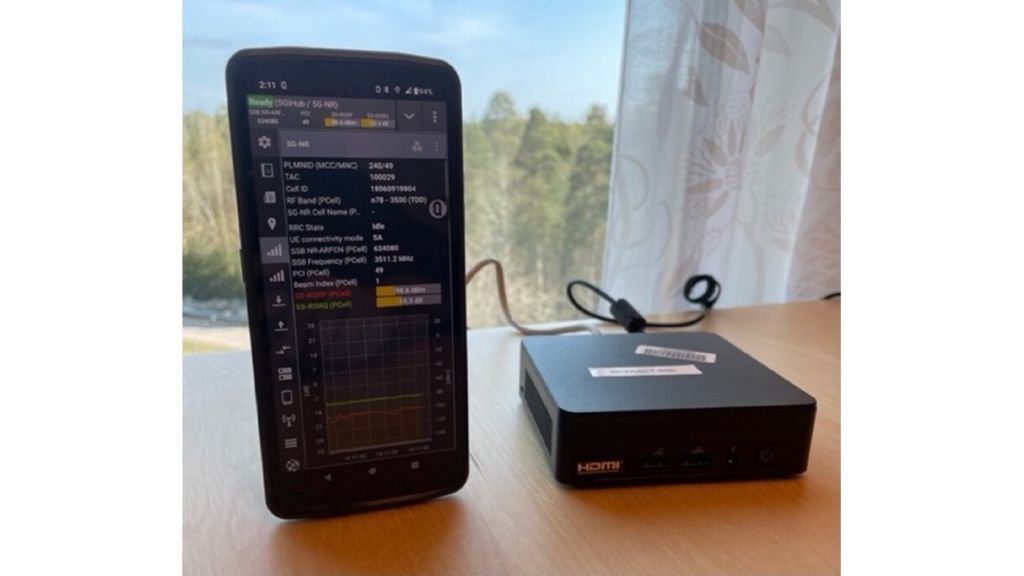
The portable setup of the INTERACT-B5G Project (Client: Crosscall device with Qualipoc; Server: ASUS NUC 12WSK).
Rohde & Schwarz MNT equipment helps us conduct measurement campaigns in two B5G non-public testbeds: one at Karlstad University called CARL-W and one available at the Fraunhofer Institute for Production Technology in Aachen known as 5G-ICE. Our preliminary results clearly show the QoS/QoE performance benefits from B5G systems and advanced features (dedicated edge deployments and service-tailored radio scheduling mechanisms), particularly with demanding Industry 4.0 process automation services.

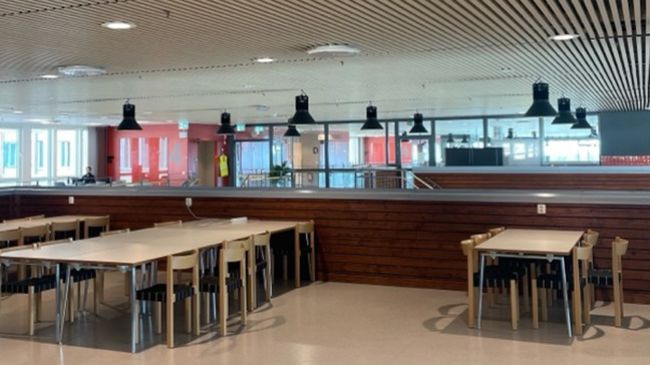
.
Example of 5G Ericsson radio dots forming the CARL-W testbed and providing non-public connectivity at Karlstad University.
In short, we are carrying out accurate measurements that help explore how interactive applications evolve in B5G networks to better shape upcoming 6G systems with data-driven knowledge.
Marco: It’s great to see our devices used in advanced projects and shared among institutions. What does the future hold? Do you have other research fields where you are active and you think could benefit from a Rohde & Schwarz MNT device?
Giuseppe: Looking ahead, we are very excited about research into upcoming 6G networks with requirements and opportunities far beyond those in 5G and B5G. We are particularly interested in expanding measurement activities in combined terrestrial and non-terrestrial networks (TN-NTN) to seamlessly connect across aerial (e.g., satellite) and terrestrial links, integrated sensing and communication (ISAC) where the networks can support both communications and high-precision environmental sensing and new internet of things (IoT) devices and networks.
Other interests include user/device positioning. Our ongoing collaboration with R&S and Sapienza University of Rome has already made significant contributions with positioning solutions for NB-IoT and 5G networks that leverage machine learning. We plan to do the same with 6G.
We are also planning joint educational/training activities with Rohde & Schwarz. Karlstad University is currently part of the 5G-DiGITs project (https://5g-digits.eu), an Erasmus+ initiative to develop an advanced educational curriculum for teaching about next-generation mobile networks across European universities and vocational institutes. An industrial guest lecture led by Rohde & Schwarz is planned with key expertise in mobile network architectures and protocols.

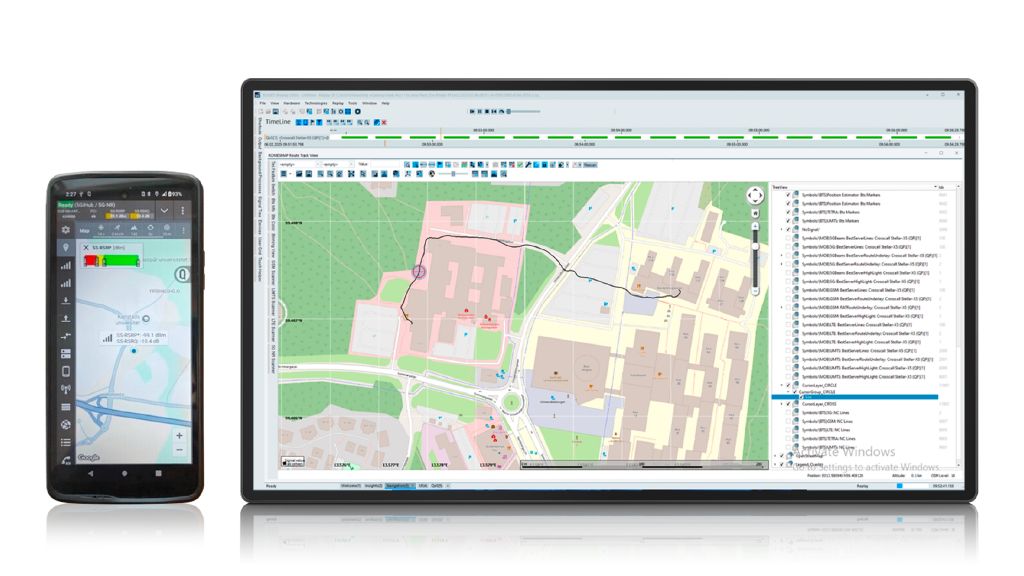
Example of usage of Qualipoc and ROMES at Karlstad University.
At Karlstad University, we are excited to continue our successful collaboration with Rohde & Schwarz since we believe that Rohde & Schwarz MNT devices will be crucial for empirical investigations into next-generation communications systems.
Marco: We are looking forward to doing more with you. Sharing experience is a big help and it is nice to see new opportunities open up.
Thank you very much.


