



Written by Simon Allemann | August 28, 2019


The NPS methodology relies on established metrics, such as success ratio and setup time, that are based on a transparent method. Furthermore, it allows pinpointing weak spots and the underlying root causes of non-optimal performance.
Compare apples to apples
Collecting the necessary data seems like an easy task. However, professional benchmarking has to guarantee the comparison of apples to apples.
It begins with the smartphones and user equipment (UE) used for testing. All devices must operate under identical conditions, such as maintaining the same ambient temperature. If one UE overheats, it will throttle its central processing unit (CPU), which can directly affect its performance and, consequently, the operator's scoring.
At the testing level, the controlling software must ensure that each test begins simultaneously. This is crucial for maintaining consistent conditions across all measurement channels. When comparing key performance indicators (KPIs) for calculating the Net Promoter Score (NPS), it is essential that each channel performs the same test at the same time and under identical conditions. To facilitate this, the R&S SmartBenchmarker software includes a feature called "sync action" within its NPS templates.

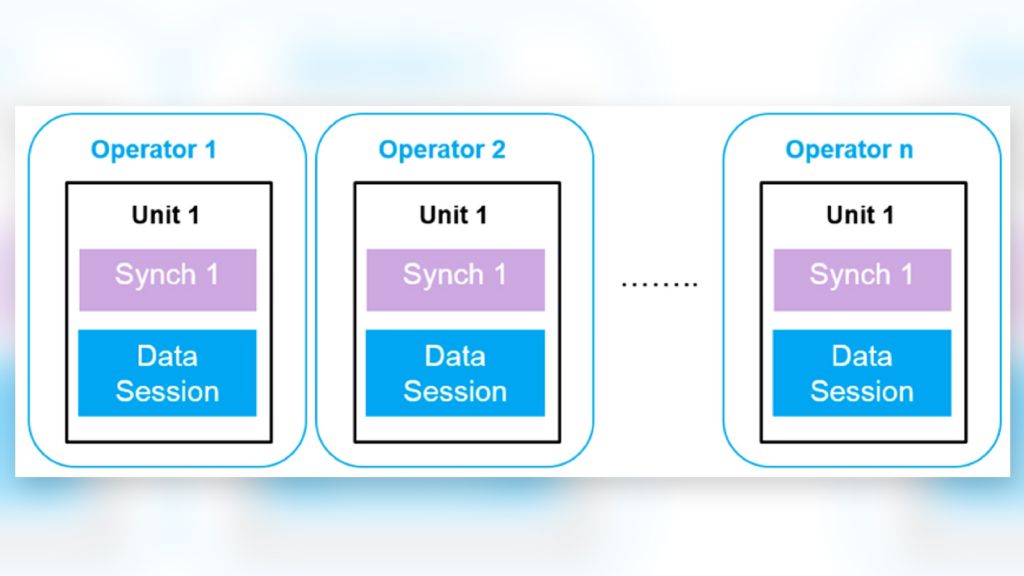
The “sync action” software module checks the status of the running test on all involved channels and allows starting the next test only after the previous one has finished. This guarantees the synchronization of all channels.
Network Performance Score templates
Rohde & Schwarz provides NPS templates that enable users to effortlessly set up their NPS campaigns, with all the complex elements preconfigured in the templates. Users only need to adjust the hostnames of the servers or the URLs of the web pages to fit the specific country or region. Additionally, Rohde & Schwarz offers guidelines on the appropriate types of URLs to use in various regions and countries.
There are several NPS templates available, reflecting the latest network technologies and use cases. The fundamental structure of the Network Performance Score (NPS) considers typical application classes, such as telephony and data services.

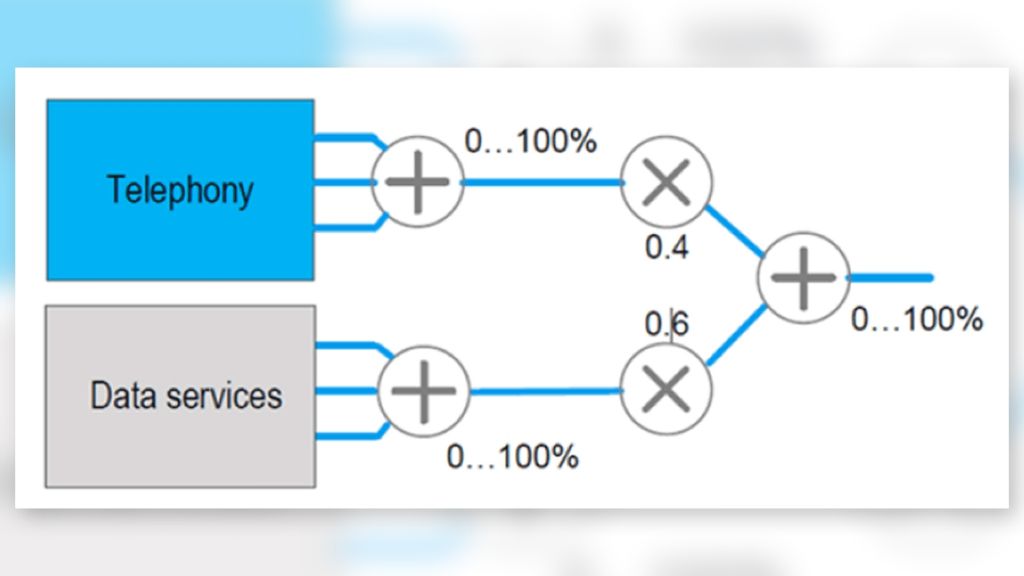
The basic structure of the Network Performance Score
The telephony subscore is designed to assess the end user's experience with telephony services. In calculating this score, factors such as availability, accessibility, retainability, and performance are taken into account. The telephony or call test template features a double-ended call with speech quality evaluation and incorporates the necessary "sync action." This call template is ready to use without any additional modifications.

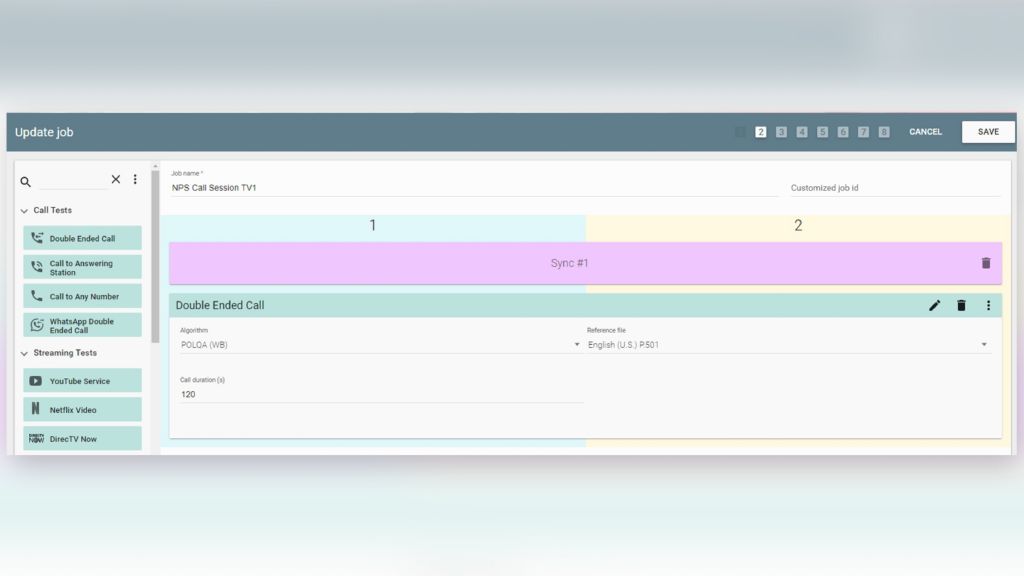
Network Performance Score for data services
The subscore for data services is comprised of three key areas that address various types of services and characterize different types of requests within a network. These areas include:
- (Plain) data transfer (HTTP)
- Video streaming
- HTTP browsing and social media
Video services account for a significant portion of data transferred in mobile networks, with YouTube being the most widely used streaming platform. Therefore, they must be included in testing. In addition to measuring access times and perceived quality, video tests place considerable demands on the network, particularly in ensuring uninterrupted data delivery to prevent outages. As a result, these tests serve as a valuable complement to plain HTTP data transfer tests, where continuous transfer is not required and cannot be assessed.
For data services testing, Rohde & Schwarz offers two options: A straightforward setup with a single session or a more complex configuration featuring three interleaved sessions. Typically, the data session begins with a pre-load ping test, followed by a series of data tests that simulate the behavior of modern smartphone users, including file downloads, file uploads, browsing, video streaming, and social media/OTT applications.


In the data service template, the user simply has to replace the URLs with the parameters of the corresponding market. After that, the test is ready.
Transparent and objective benchmarking
The Network Performance Score (NPS) provides a scoring mechanism that enables efficient and reliable comparisons between operators in a market, as well as across different measurement campaigns in various regions and countries, or before and after the implementation of new technology or software. The transparent structure of the score allows an efficient drill down into the region or service and into the KPIs responsible for a non-optimal overall score.
The seamless integration and support of the NPS within the Rohde & Schwarz benchmarking product portfolio equip customers with the right tools to maximize the value of their network.»
Find comprehensive information about the NPS on our dedicated web page.


