Challenge #2: Mobility and handovers
There is another challenge that arises from NTN satellites operating in LEO: the lower orbit means that the coverage area is smaller, which requires more frequent handovers to maintain service continuity. Depending on the geographical location, an inter-orbit handover may also be necessary. In addition, accurate knowledge of satellite and UE positions and velocities (ephemeris information) is critical for managing the link and compensating for impairments. For long-term test scenarios, manual deployment and handover become problematic, as they lead to errors, delays and high resource demands.
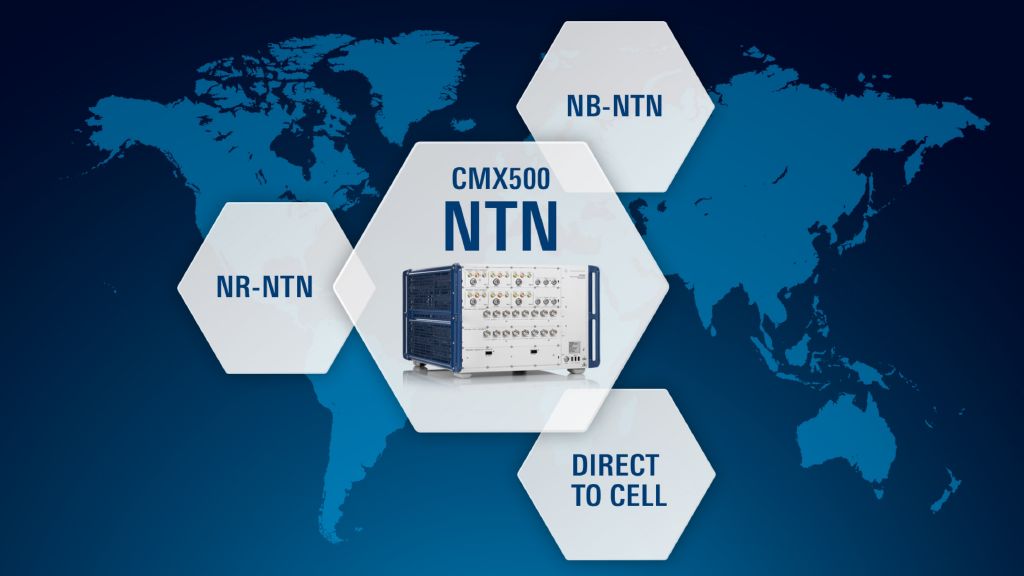
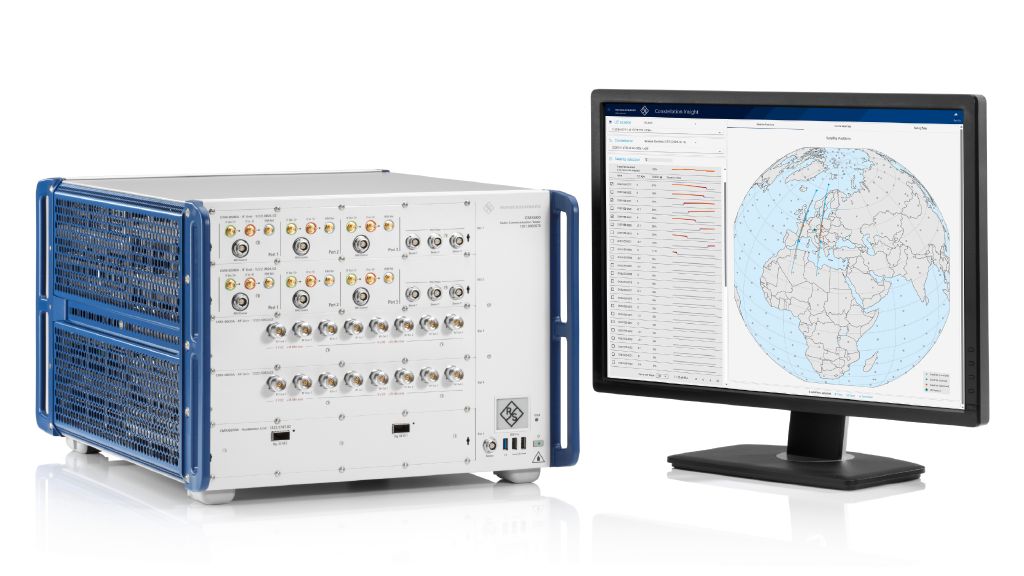
The CMX500 supports testing for all orbits and provides comprehensive mobility and handover testing:
- Auto-deployment and auto-handover capabilities to bring satellite cells online and transfer connections without the need for manual intervention
-
Moving cell and beam steering emulation
- Support for complex handover scenarios, including both intra- and inter-satellite handovers
- Precise ephemeris information to simulate realistic mobility and impairment compensation
- Moving UE trajectory simulation via GPX track files for realistic testing of user terminals installed on moving platforms such as connected vehicles, high-speed trains, aircraft and maritime vessels.
In particular, the UE trajectory simulation allows the user to load the terminal’s route directly from a standard GPX file into the
R&S®SMBV100B
, rather than constraining the device under test to static geographic coordinates. The generator feeds both the CMX500 and the UE with the corresponding location information. The CMX500 continuously calculates the dynamic relative geometry between the traveling ground terminal and the moving satellite constellation in real time. This updates visibility horizons, Doppler frequency sweeps and propagation delays under dual-mobility conditions.