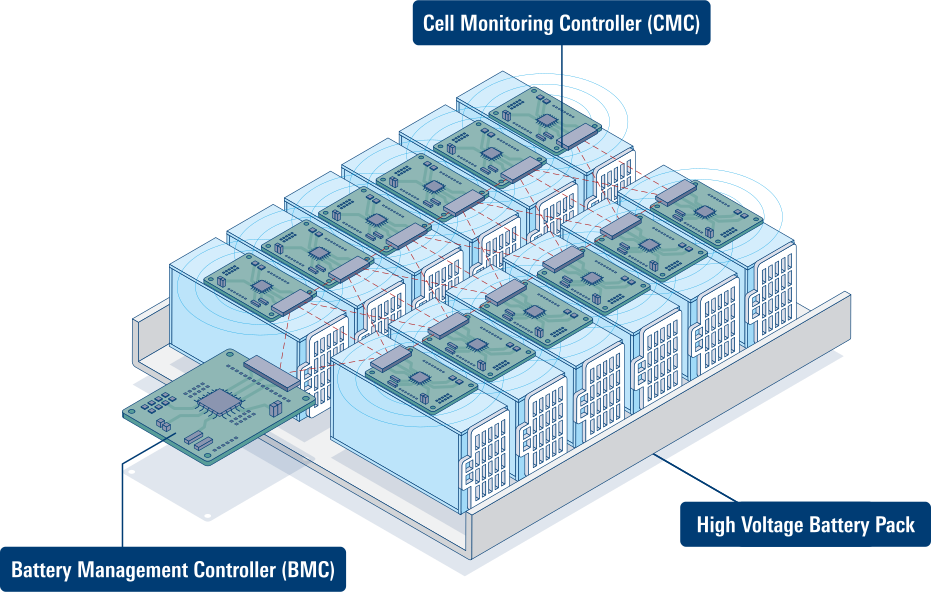
In a wireless BMS (wBMS), each battery module is connected to a battery management controller (BMC) through a cell monitoring controller (CMC). The link is established either by a robust 2.4 GHz ISM band radio transceiver or by an ultra-wideband (UWB) communication channel, so no wired harnesses are required.
This wireless architecture brings several advantages:
- Weight & space savings – eliminating cables reduces both the vehicle’s weight and its occupied volume.
- Simplified integration – modules can be mounted, serviced, or swapped without disconnecting or re-routing wiring.
- Higher reliability – the system is less vulnerable to vibration induced wire fatigue and connector failures, which is critical in harsh automotive environments.
While the wBMS delivers clear benefits for space efficiency, assembly and serviceability, it also introduces new testing challenges that must be addressed: