
Automotive EMC and full-vehicle antenna testing

Automotive EMC and full-vehicle antenna testing

EMC and FVAT test instruments, software and systems to help you stay ahead of automotive innovations

Speak to an expert

The entire range of automotive EMC measurements from a single source

A modern vehicle is one of the most demanding electro-magnetic environments any electronic system has to operate in. High-voltage powertrains switching at high frequency, sensitive radar and lidar sensors at the heart of advanced driver assistance systems (ADAS) demanding interference-free operation and a growing stack of wireless technologies — 5G, V2X, GNSS, Bluetooth — all competing for coexistence within a confined space. As vehicles become more electrified, connected and autonomous, the electromagnetic challenges multiply. So does the cost of getting it wrong.

Addressing them all, at the same time, demands expertise across the full spectrum of automotive EMC testing — from component-level emissions and immunity measurements to full-vehicle antenna testing, automotive coexistence testing and EMC functional validation under real-world conditions. For OEMs, tier-1 suppliers and test laboratories alike, meeting global standards such as CISPR and ISO is the baseline. But for today's vehicles, robust EMC performance goes well beyond regulatory compliance. It is fundamental to safety, to the quality of connected services, and to getting vehicles to market without costly late-stage surprises
Next-generation automotive challenges driving EMC testing complexity

Electrification, autonomy and connectivity are transforming vehicles and creating electromagnetic environments far more complex than any previous generation of testing was designed to handle.

Electrification introduces fast-switching SiC and GaN power semiconductors that generate substantially higher electromagnetic emissions than conventional internal combustion vehicle drivetrains. Add bidirectional charging to the picture and the challenge extends beyond the vehicle itself — EMC integrity must now be maintained in active interaction with external power infrastructure. These are primarily emissions challenges, demanding measurement and control across a far wider frequency range than legacy automotive EMC testing ever covered.

Autonomy raises equally serious concerns, but on the immunity side. ADAS systems rely on highly sensitive sensors — radar, lidar, cameras — operating in dense electromagnetic environments. RF interference that corrupts a radar signal isn't a failed test — it's a safety failure: the system can miss a real obstacle or respond to a phantom one. Validating sensor immunity and ensuring coexistence between ADAS systems and the vehicle's own electronics are among the most important challenges in modern automotive EMC testing.

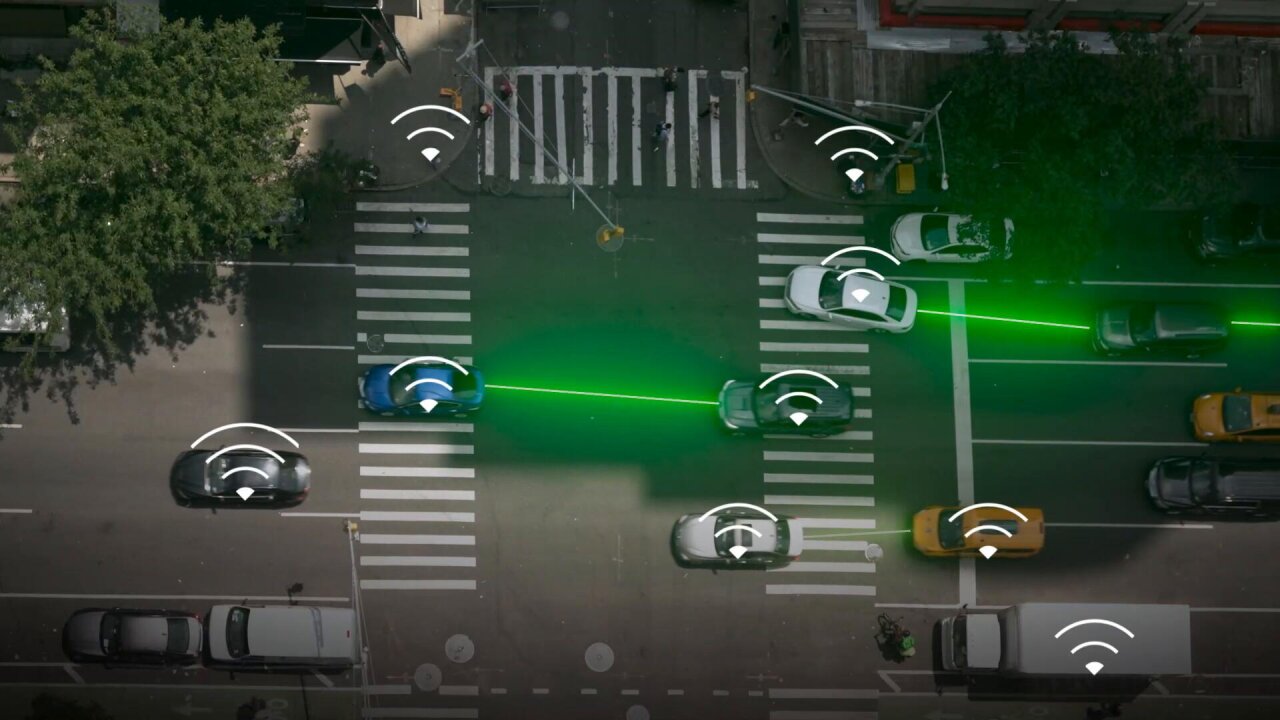
Connectivity completes the picture — and introduces its own category of risk. The integration of 5G, V2X, GNSS and multiple short-range wireless technologies into the vehicle architecture creates new pathways for interference between tightly co-located systems. And with over-the-air updates now standard, the vehicle's electromagnetic profile can change even post-production — making vehicle OTA testing an ongoing validation requirement, not a one-time checkbox.

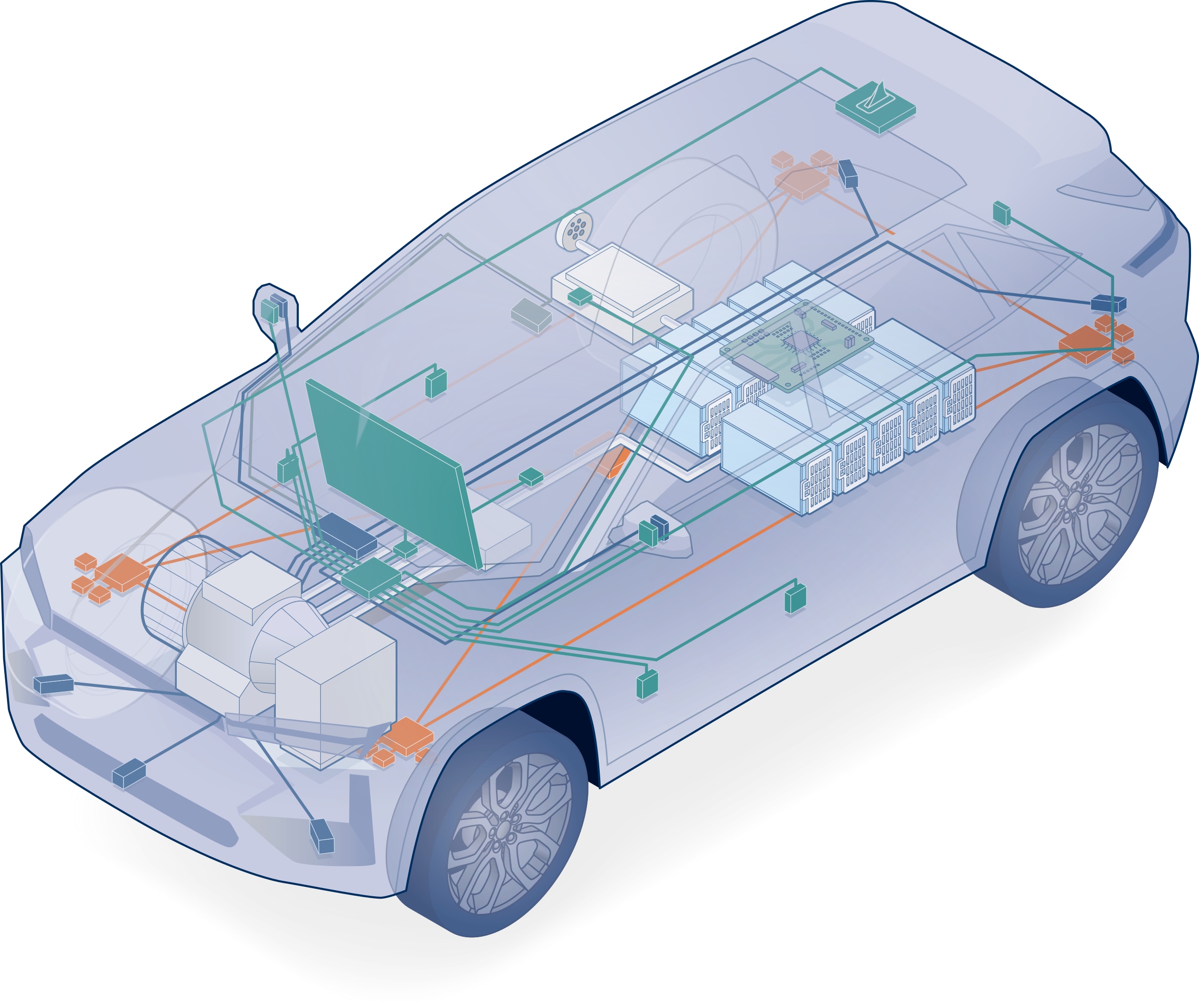
modern vehicle
In a modern vehicle, every electronic system is both a source of electromagnetic interference and a victim of it.
Open Lightbox

What's changing for automotive EMC testing

  • Traditional automotive EMC testing was mostly component-focused: measure emissions and immunity at the part level, validate against the standard and move on. A stack of passing CISPR 25 reports no longer predicts how a complete vehicle behaves with everything switched on — coupling between high-voltage powertrains, ADAS sensors and onboard wireless systems only emerges in the integrated vehicle. This is pushing more validation work into full-vehicle chambers and system-level test setups.
  • ADAS sensor immunity has also moved from the EMC report into the functional safety case. A radar that misses a target under RF stress is no longer just a pass/fail question against CISPR limits — it is something the OEM has to defend against ISO 26262 and SOTIF requirements. Test evidence has to carry that argument.
  • Validation itself no longer ends at the start of production. Over-the-air updates, new cellular bands and software-defined radio behavior can change a vehicle's electromagnetic profile years after it leaves the factory — making EMC a continuous discipline rather than a one-time milestone.

Meeting this expanded reality requires a combination of disciplines — automotive EMC compliance testing, full-vehicle antenna testing, EMC functional validation and antenna digital twin modeling — each addressing a different aspect of the vehicle's electromagnetic performance.

Complete automotive EMC testing solutions from Rohde & Schwarz

Full vehicle antenna testing

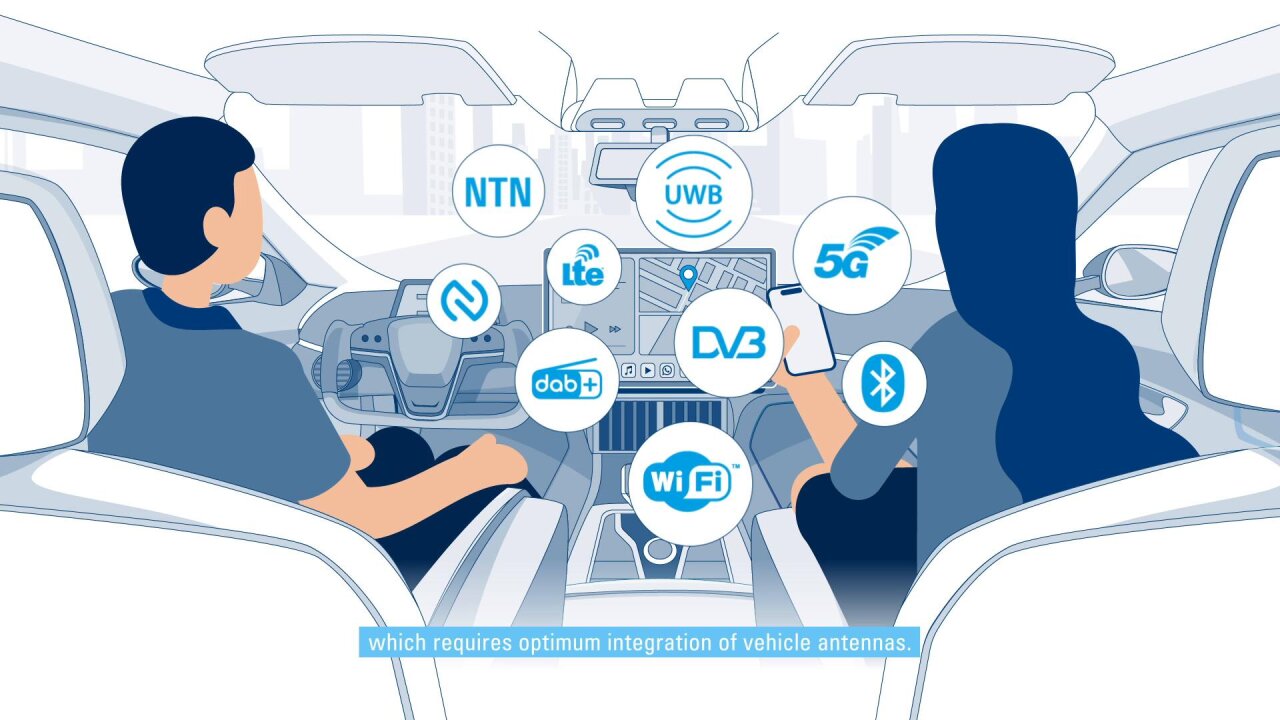
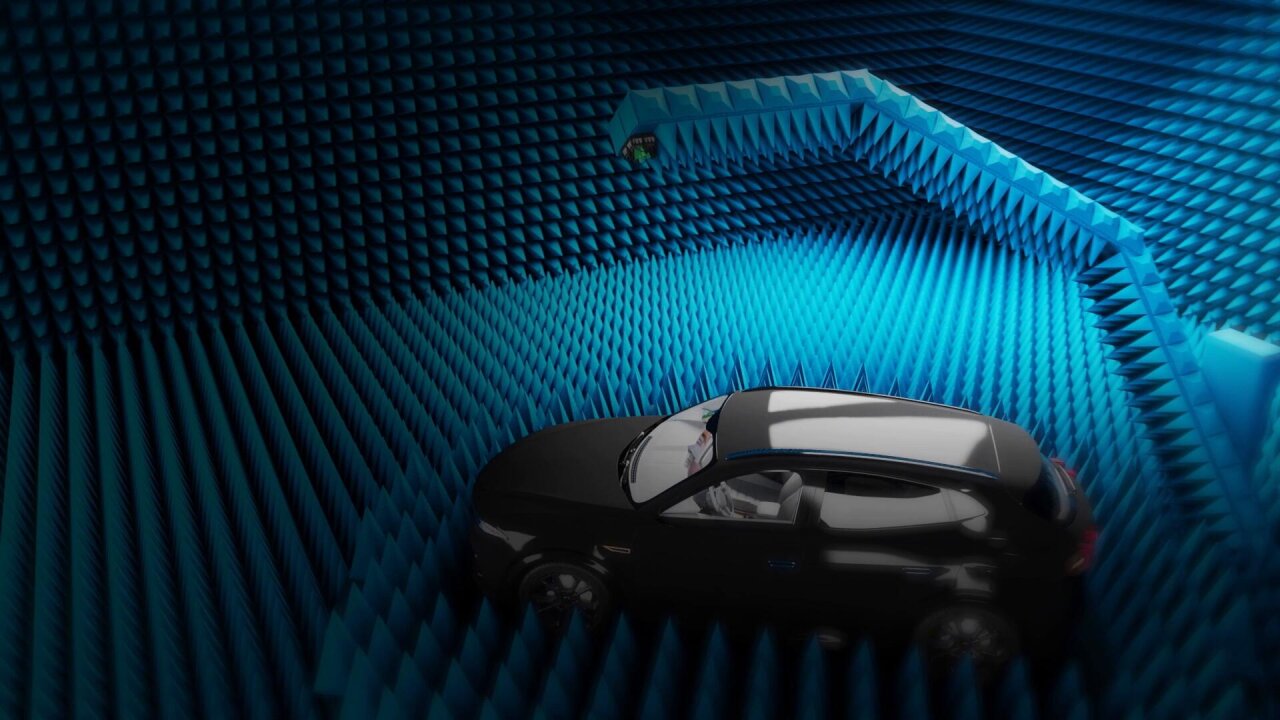
A modern vehicle is home to dozens of antennas — for GNSS, C-V2X, cellular, Wi-Fi and UWB — all of which must coexist and perform reliably within the same platform. Rohde & Schwarz offers customized FVAT systems that deliver full 3D radiation pattern characterization across all relevant frequencies, ensure robustness against interference and validate features and are relied upon by vehicle manufacturers around the world.

Learn more about full vehicle antenna testing

Automotive EMC compliance testing

Automotive EMC standards evolve constantly — and some of the most important ones are still being written, shaped by electrification, autonomy and connectivity. From component-level measurements to full-vehicle testing under dynamic driving conditions, our instruments, software and expertise cover CISPR, ISO, UN ECE and OEM-specific standards, backed by active participation in the bodies that shape tomorrow's requirements.

Learn more about automotive EMC compliance testing

EMC functional testing

Testing safety-critical vehicle functions on a proving ground is becoming increasingly impractical — too time-consuming, too variable and too difficult to control at scale. Rohde & Schwarz provides the test platform and signal simulation capabilities to verify functions from emergency braking to 5G eCall with the repeatability and efficiency that only a controlled lab environment can deliver.

Learn more about EMC functional testing

Automotive antenna digital twin

Predicting how an antenna will behave in a specific automotive environment — surrounded by metal, glass and passengers — is one of the harder problems in automotive antenna development. Physical antenna characterization combined with simulation software solves it: real-world behavior can be modeled before a vehicle exists, with results in hours rather than days.

Learn more about automotive antenna digital twin

Navigating automotive EMC standards

There is no single standard that defines automotive EMC compliance. Test laboratories, tier-1 suppliers and OEMs have to work with CISPR, ISO and UN ECE regulations at the same time, plus platform- and market-specific OEM requirements. As new vehicle technologies keep reshaping these specifications, staying compliant means staying ahead of the standards, not just meeting what is published today.

Key standards governing automotive EMC testing include:

  • CISPR 25 — limits and procedures for the measurement of radio disturbances
  • CISPR 36 — emissions from electric and hybrid vehicles for off-board receiver protection below 30 MHz
  • ISO 11452 series — component immunity to narrowband radiated electromagnetic disturbances
  • ISO 11451 series — full vehicle immunity to narrowband radiated electromagnetic disturbances
  • ISO 7637 series — electrical disturbances from conduction and coupling on vehicle buses
  • ISO 10605 — electrostatic discharge (ESD) test methods for road vehicles
  • UN ECE R10 — vehicle type approval for electromagnetic compatibility in Europe

Automotive EMC FAQs

Sign up for our newsletter

Stay up to date with the latest news, information and resources

Sign up for our automotive newsletter

Request information

Do you have questions or need additional information? Simply fill out this form and we will get right back to you.
For service/support requests, please go here to log in or register.

Marketing permission

Your request has been sent successfully. We will contact you shortly.
An error is occurred, please try it again later.