


Always-on with AI and XR applications
AI glasses and personal AI wearables are emerging as a major new device category. From AI-enabled glasses to earbuds, pendants and pins, these devices are designed to deliver intuitive, always-on experiences in compact and lightweight form factors.
People today check their phones constantly, with the average person checking their phone 100-200 times per day. AI glasses can reduce the friction that is associated with repetitive smartphone use. In other words, they can reduce the number of steps required to do certain tasks. For example, using a smartphone to translate a menu in a foreign country involves taking out the phone, unlocking the phone, opening a translation app, turning on the camera and scanning the menu. With AI glasses, the translation could begin with a single voice or gesture command.
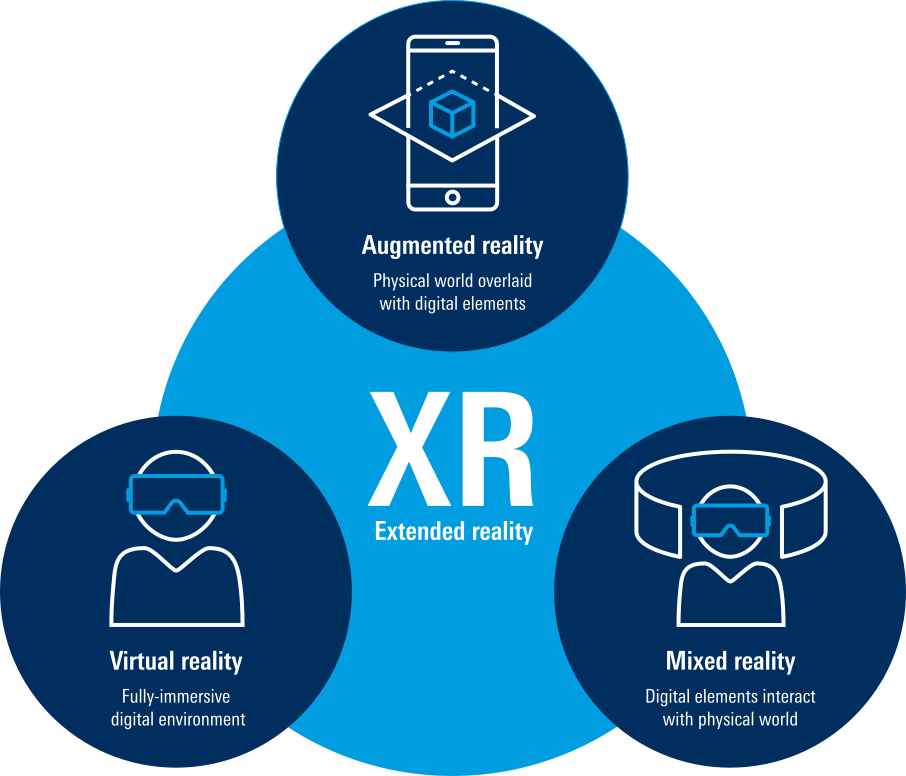
AI is a fundamental technology enabler for XR. AI technologies, such as computer vision and natural language processing, are central for XR. This means that tracking, real-world sensing and even voice control all require AI to work. 3D world building with generative AI is also expected to play a key role in XR experiences.
AI glasses rely on distributed computing architectures to balance performance, battery life and thermal constraints. Testing is therefore crucial to ensure that applications can maintain high performance as workloads move dynamically between device and network resources.