
Passive component testing

Passive component testing

Speak to an expert

What are passive components and why do they need attention?

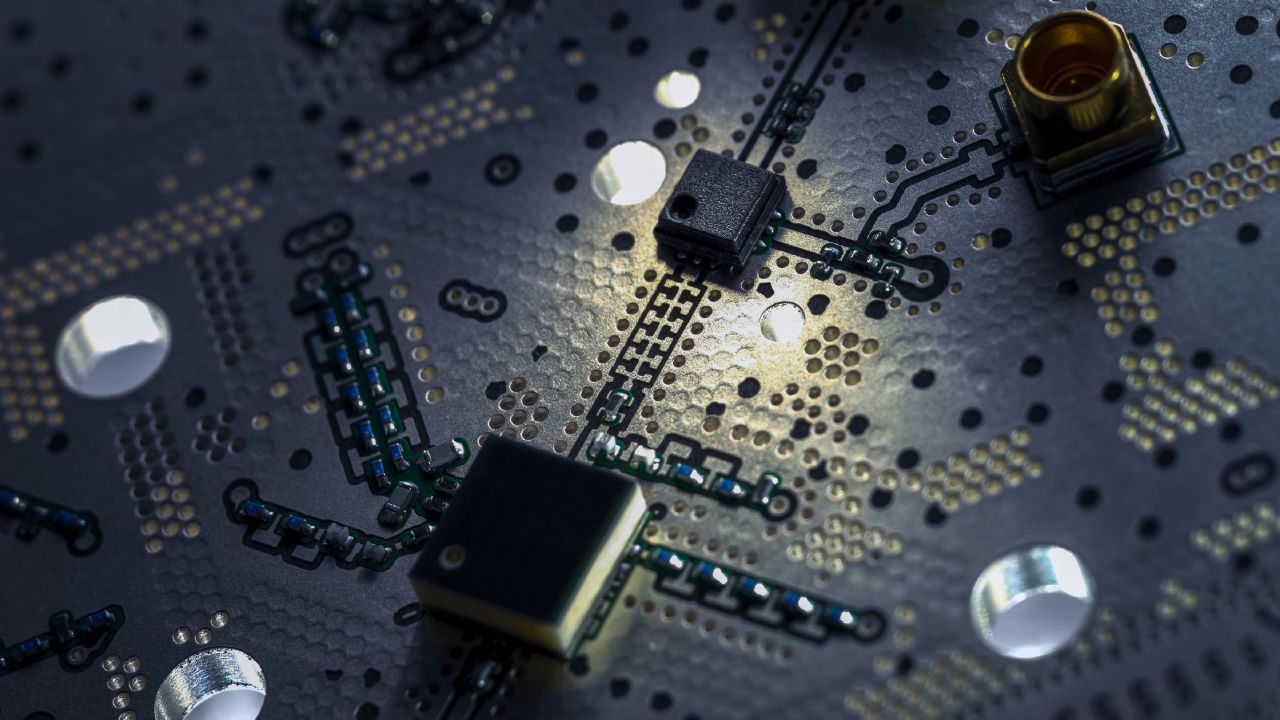
Passive RF components, such as filters, PCB’s and connectors, are crucial for signal integrity and system reliability. Rohde & Schwarz delivers trusted, advanced solutions for passive component testing, ensuring the highest quality and performance standards.

Passive components are electronic elements in an RF system that operate without the need for an external power source. Unlike active components, they do not generate or amplify signals; instead, they filter or direct RF signals.

Common passive components in RF and microwave systems include filters, combiners, couplers, cables, connectors, and capacitors.

In modern communication systems, even minor deviations in passive components can result in losses, distortions, or unexpected resonances. Passive component testing ensures that each component meets design specifications, maintains high-quality standards, and performs reliably under real-world conditions.

Key characteristics are evaluated through S-parameter (Scattering parameter) measurements, which provide critical performance metrics such as impedance, insertion loss or return loss.

Is S parameters all you need for passive component testing?

Yes and no. S-parameters (Scattering parameters) are extremely important and often the core of validation for passives in RF circuits such as filters, couplers, combiners, capacitors, inductors, transmission lines, and many more, but they aren't always all which is needed.

Why are S-parameters crucial for passive device validation?

S-parameters are crucial because they characterize a component as a “black box”. Without requiring knowledge of its internal structure, they provide an outside view of any two- or multiport device as a network.

They further describe how a component affects signals across a range of frequencies – which is especially important since passive components rarely behave ideally and their performance changes with frequency. This makes S-parameters a core instrument in modern device testing, revealing how a component's characteristics vary across its operating spectrum.

They are also essential for determining how a component matches its surrounding circuit, minimizing reflections while maximizing power transfer through impedance matching.

Additionally, S-parameters are critical for assessing the stability of RF circuits containing passive components. And they are widely used to generate accurate simulation models, such as SPICE models, enabling reliable prediction regarding the behavior of multiple interconnected components at system level.

What S parameters do not directly capture

  • DC parameters: These include values such as voltage and current ratings, insulation resistance, the resistance of resistors, as well as inductance and capacity. They are typically measured by LCR meters.
  • Power handling: Passive components can change their behavior when subjected to maximum input RF power compared to low power levels. Acoustic wave filters are a notable example of this effect.
  • Non-ideal behavior: This refers to effects such as the creation and amplification of harmonics or different behavior with increasing power levels. S-parameters are inherently a linear measurement and cannot characterize these non-linear effects, which require specialized test setups to observe.
  • Temperature coefficient: S-parameters change over temperate: Standard S-parameters represent a component's behavior at a single, specific temperature, so multiple measurements in a thermal chamber are required to characterize performance across a full temperature range.
  • Aging of components: Aging refers to the process by which a component's characteristics degrade over its operational lifetime. S-parameter measurement provides only a snapshot of performance at one point in time, while assessing aging is typically done with stress tests over varying temperatures and high power levels.
  • Time domain characteristics: They describe how a component’s voltage and current respond to changes over time, rather than its behavior at a steady frequency. Direct measurement is typically performed using oscilloscopes.

S-parameters are an important measure for passive component validation. However, they are not always giving the full picture. The specific tests needed will depend heavily on the component type, the operating environment, and the criticality of the application.

Your passive component testing challenge

A thorough validation process requires a combination of DC measurements, S-parameter analysis, power handling tests, and physical inspections to ensure the component meets all the requirements of its intended application.

Very often this is accomplished by multiple S-parameter measurements at various conditions.

This drives up the number of S-parameter sweeps significantly thus there is a strong need for fast but still accurate S-parameter measurements. Key requirements are:

A thorough validation process requires a combination of DC measurements, S-parameter analysis, power handling tests, and physical inspections to ensure the component meets all the requirements of its intended application.

Very often this is accomplished by multiple S-parameter measurements at various conditions.

This drives up the number of S-parameter sweeps significantly thus there is a strong need for fast but still accurate S-parameter measurements. Key requirements are:

  • Measurement speed: High-speed measurements help streamline both validation and production processes.
  • Dynamic range: A wide dynamic range is necessary to capture all relevant effects of the device under test (DUT).
  • High power delivery: Delivering high power into the DUT ensures testing across a broad range of operating conditions.
  • Stable test instrumentation: Stable instruments minimize the need for frequent user calibrations, reducing downtime of the test setup.
  • De-embedding: Test device fixtures and sockets that cannot be compensated for by user calibration must be properly de-embedded to ensure accurate measurements.

As these measurements run often in conjunction with various other instrumentation, synchronization via flexible triggering, and easy automation are required for fast and reliable test implementation.

Our passive component testing solutions

Rohde & Schwarz offers a comprehensive set of test instrumentation specifically designed to address the challenges in passive device validation. The test solutions include foremost different classes of vector network analyzers, LCR meters and RF amplifiers for high power stress test.

Rohde & Schwarz vector network analyzers offer various features to overcome the challenges in passive component tests. Looking at the R&S®ZNB3000 class as a leading test instrument for this application:

  • High speed: A clear priority in designing the ZNB3000 was the need for speed to enable industry leading throughput in validation and production.
  • Wide dynamic range: The ZNB3000 offers an exceptionally wide dynamic range of up to 150 dB, allowing measurements very far down in level. On top, it supports using higher IF bandwidths and still generating low-noise traces, which together enable faster measurements.
  • Sweep feature: The instrument’s segmented sweep feature allows different sweep settings in different frequency ranges - for example, in filter tests, the sweep can be faster in the expected passband, where the receive level is high, and slower in the stopband to achieve greater accuracy at lower measurement levels.
  • Connection options: When combined with additional switch matrices, the ZNB3000 can connect to high port count devices such as advanced switches or multiplexers, or be used to build production systems with multiple test devices in a single test fixture. In addition, true multiport solutions like the R&S®ZNBT enable parallel testing on up to 24 RF ports.
  • SCPI recorder: The SCPI recorder further enhances usability by turning every user into a programmer, automatically generating automation scripts based on manual interaction with the instrument.

Related products for passive component testing

R&S®ZNB3000 vector network analyzer

High-volume production of RF components and short ramp-up times is the environment where the R&S®ZNB3000 shines and delivers maximum results.

Product information

R&S®LCX LCR meter

The R&S®LCX LCR meters are versatile, extremely accurate and perform measurements quickly. They are ideal for challenging applications in development and production.

Product information

R&S®ZNBT Vector network analyzer

The R&S®ZNBT is a multiport vector network analyzer with up to 24 fully integrated test ports.

Product information

R&S®SAM100 system amplifier

The R&S®SAM100 system amplifier is an ultra-broadband solid state microwave amplifier with a frequency range from 2 GHz to 20 GHz and power of up to 20 W.

Product information

Benefits of our passive component testing solution

The Rohde & Schwarz passive component test solutions bring you a wide range of benefits to validate your device fast, with the needed precision as well as cost-efficiency.

Some of the various benefits are listed here:

  • Fastest validation and production: The speed-optimized R&S®ZNB3000 vector network analyzer enables industry-leading throughput in both validation and production.
  • True parallel test on multiple DUTs: The multiport R&S®ZNBT vector network analyzer supports up to 24 VNA ports, while the R&S®ZNrun automation suite optimizes the test flow for maximum efficiency.
  • Easy software integration: The SCPI recorder automatically generates test code, simplifying integration into existing software environments.
  • Frequency extensions into the THz space: Trusted Rohde & Schwarz converters allow measurements at extremely high frequencies.
  • Multifunctional instruments: A single VNA supports a variety of tasks, providing S-parameters as well as derived results such as capacitance of capacitors at RF frequencies and time-domain measurements with built-in TDR (Time Domain Reflectometry) and DTF (Distance To Fault) functions.
  • High result accuracy: Even with complex lead-in and lead-out setups, multiple internal deembedding tools ensure precise measurement results.

Do you have further questions about our passive component testing solutions?
Then feel free to contact us.

Related solutions

Mixer & frequency converter testing

Mixers are a fundamental element in a wide range of applications such as modulators, phase detectors, frequency converters and synthesizers in many RF and microwave systems.

More information

Oscillator, clock and PLL testing

Oscillator output signals are characterized and tested to make sure the device or module meets the design specifications for clock accuracy, signal purity and stability.

More information

FAQs

Request information

Do you have questions or need additional information? Simply fill out this form and we will get right back to you.
For service/support requests, please go here to log in or register.

Marketing permission

Your request has been sent successfully. We will contact you shortly.
An error is occurred, please try it again later.