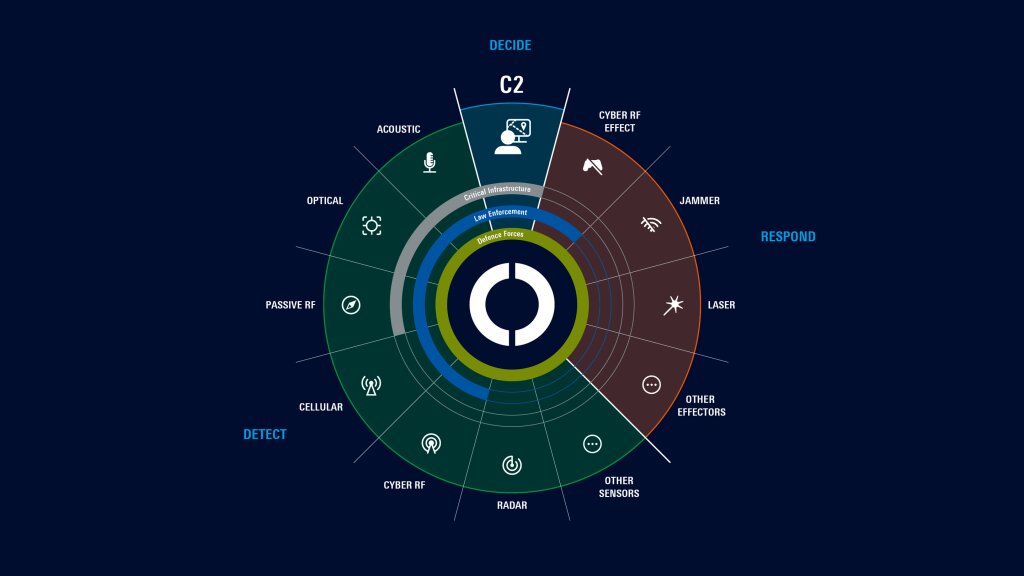



Why CUAS is a critical infrastructure continuity and safety requirement
Low cost uncrewed aerial systems (UAS) have turned low altitude airspace into a persistent operational concern. For critical infrastructure (CI) operators, the challenge is executing the Detect – Decide – Respond workflow in a way that protects continuity and safety while withstanding legal constraints and external scrutiny.
Critical infrastructure environments are defined by high consequences with little tolerance for uncontrolled air activity. Decisions must be defensible to regulators, auditors and stakeholders, while response options may be legally or operationally constrained. Drones can be used for surveillance, disruption and targeting, and continue to proliferate and evolve. In critical infrastructure settings, incidents can disrupt operations and create cascading effects, making early warning and structured escalation essential to protect people, assets and operations across sites.
Operational realities:
- High value sites with strict security perimeters
- Multi site exposure with cascading impact potential
- Authority constraints requiring escalation to public authorities
- Auditable documentation requirements