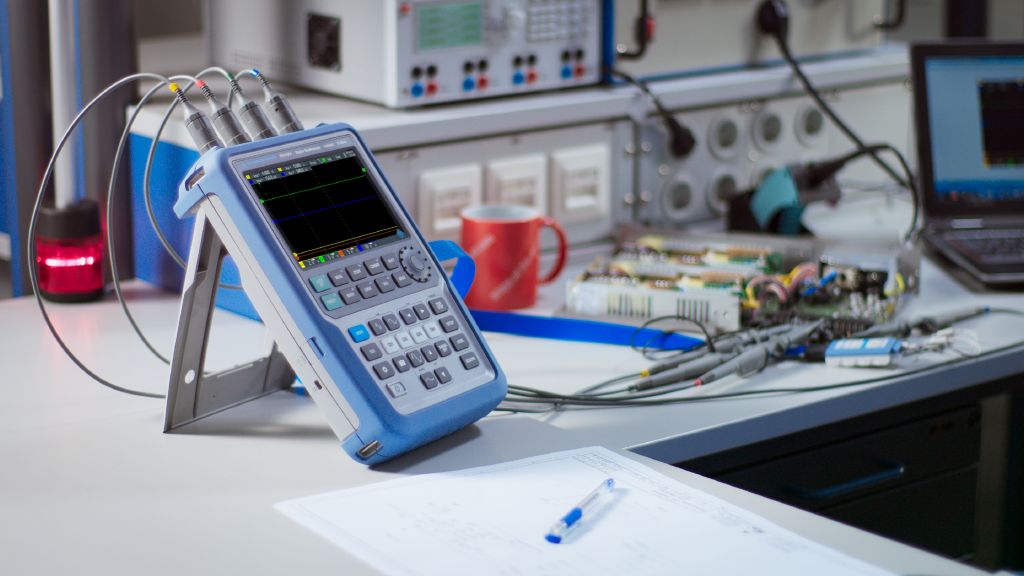
When to use an oscilloscope over a DMM and vice versa?
Perhaps your budget only allows for one of these instruments, or perhaps you have both but are unsure of which to use! The good news is that there are several measurement scenarios where it is obvious which one to use. The even better news is that both instruments work well in many cases.
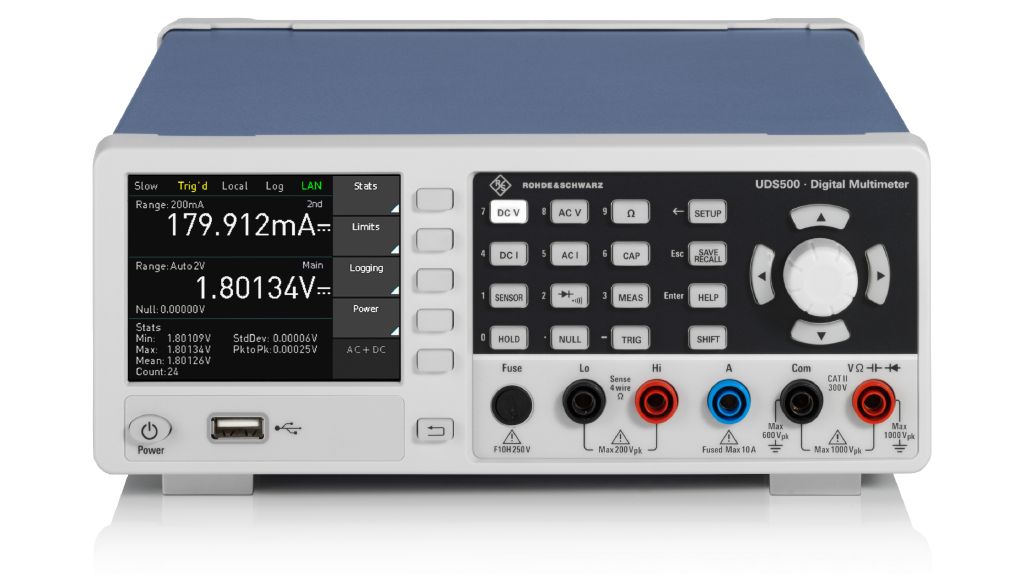
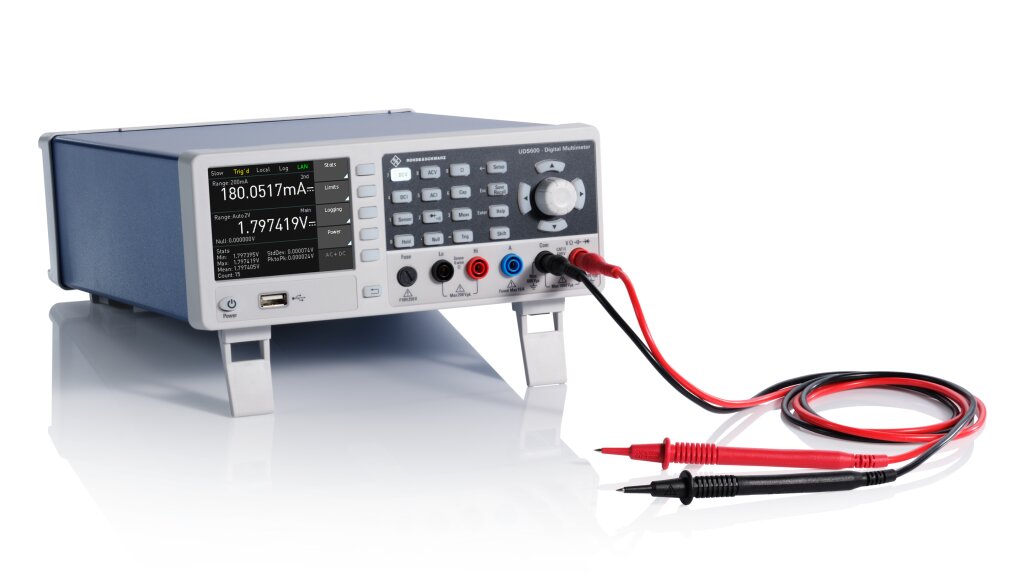
A DMM is the better choice when you need to measure the characteristics of discrete devices. A DMM, such as the R&S®UDS, can measure specific aspects of a resistor, capacitor, diode or even a transistor. The R&S®UDS could measure, for example, the capacitance of a capacitor or forward drop of a diode. These measurements are helpful when designing a circuit or determining whether a component is damaged. For a complete characterization, however, you may want to consider an LCR meter, which measures the parasitics of a passive component.
DMMs are also good for measuring voltage or current with signals near DC. However, when measuring AC (if there is a frequency content above 100 kHz), a DMM might not correctly measure the signal since its bandwidth is limited.
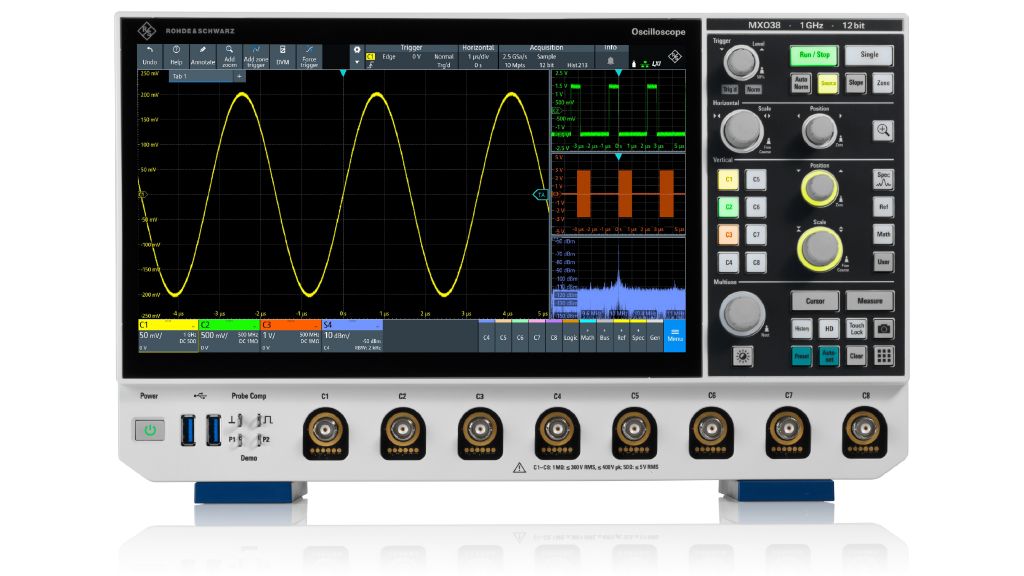
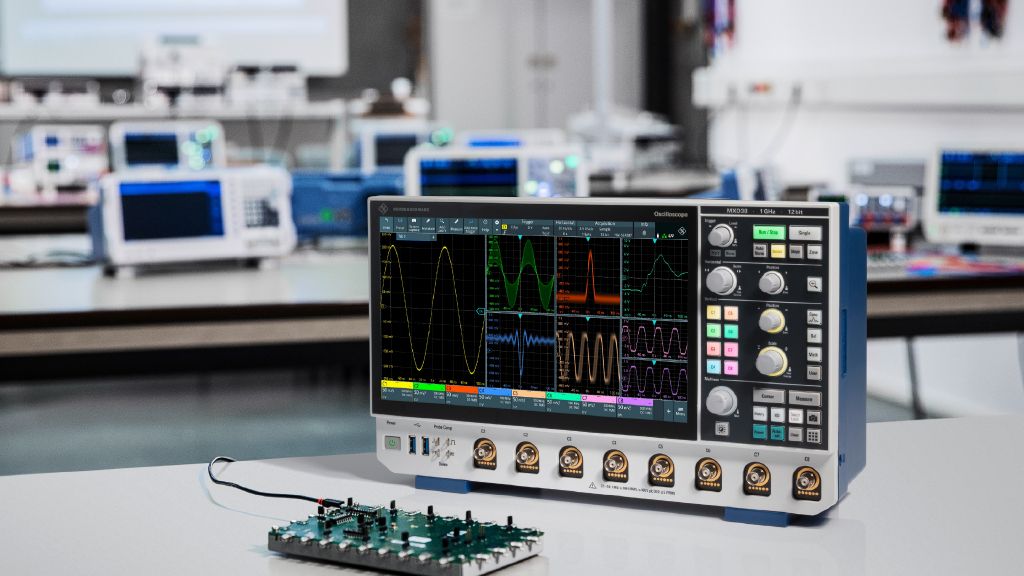
Oscilloscopes, on the other hand, have very wide bandwidths and are excellent for measuring signals with high-frequency content. They can measure DC, but they present much lower loading to a DUT than a DMM. Oscilloscopes also have multiple time-correlated channels, so they are ideal for comparing a data signal with a clock or an enable signal.
In addition, an oscilloscope is often better for measuring the clock of a microcontroller. A DMM’s test leads have high capacitance, and its frequency measure might be limited to a few megahertz. An oscilloscope, however, puts less loading on the signal and typically has a much higher bandwidth.